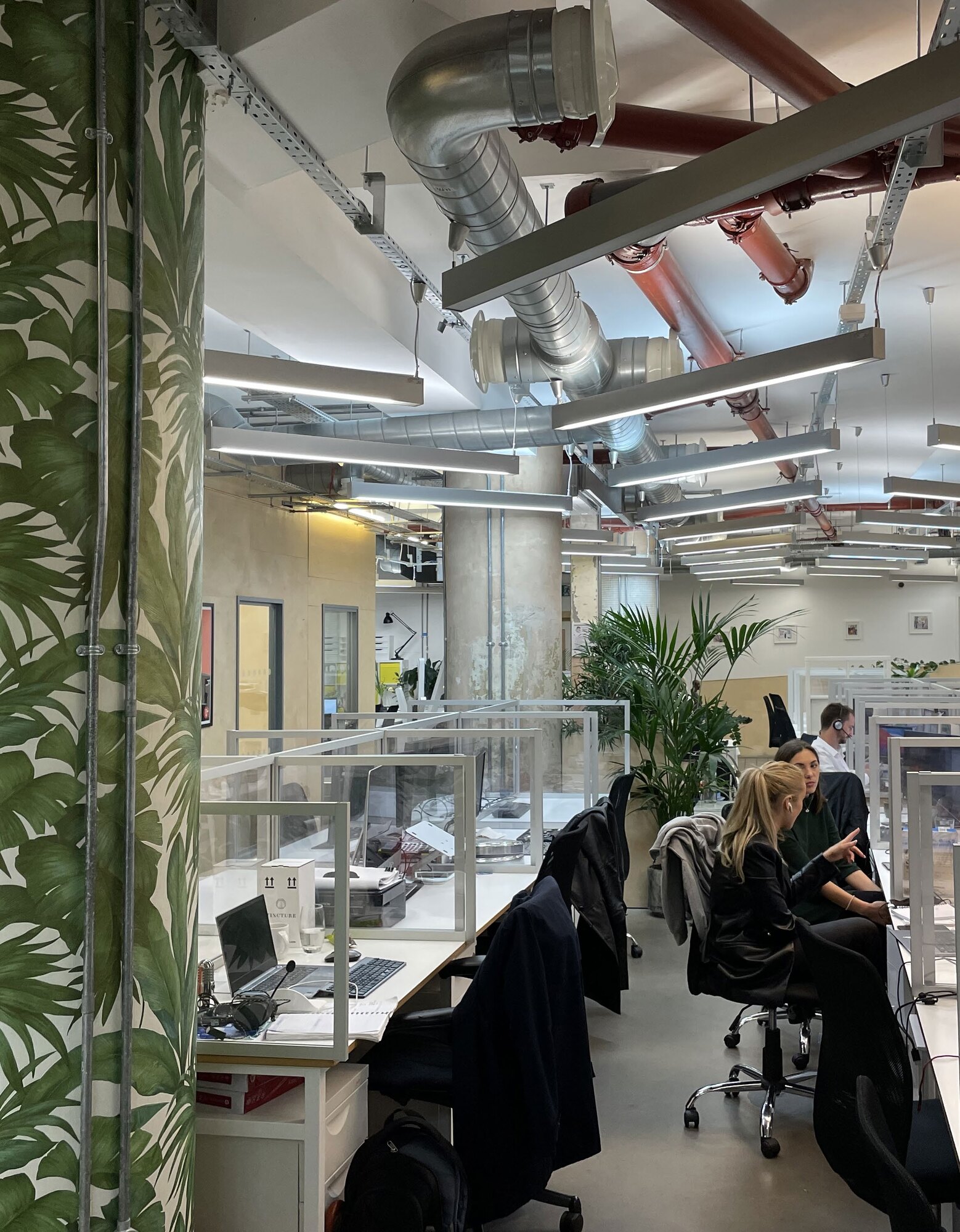
Mapping a Publishing Business
We interviewed editors, publishers and their teams across all forty-five publications. The questions explored their daily activities, the advantages and frustrations of the existing workplace, and the key relationships that changed through each publishing cycle.
The interviews and questionnaires used rating scales so the responses could be analysed rather than treated as anecdotal preference. Working with Steve Smith of Urban Narrative (Steve was ex-DEGW, an architectural firm that specialised in the design of office environments), the results became a map of the organisation: which teams needed proximity, where information moved, and where different working cultures came into conflict.
Waffle charts of the data collected showed us work patterns and habits that were not physically visible. The plan developed from evidence rather than assumption.
Quiet and Noise
Publishing depends on concentration, but not every part of the business is quiet.
Editorial teams needed close relationships within each publication and an environment that supported focused work. Sales teams were more animated, collaborative and vocal. Bringing everyone into a single undifferentiated open plan would have compromised both cultures.
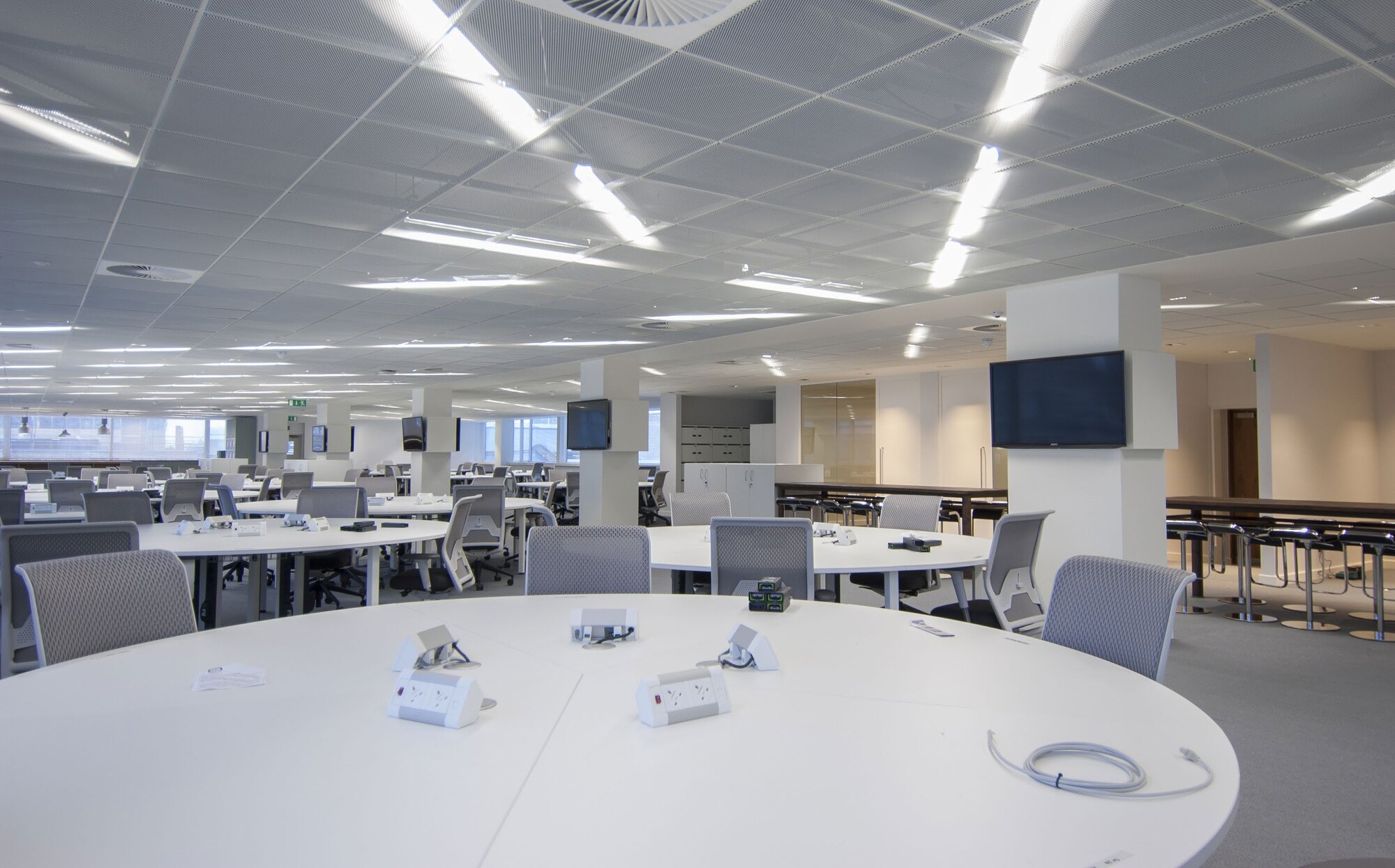
The layout therefore separated activities without isolating people. Teams with strong working relationships were placed together, while noisier commercial groups were moved away from editorial areas. Round tables reflected the sales teams’ more conversational culture and gave them a setting suited to the way they worked.
Efficient, Effective, Expressive
The research was distilled into three ambitions: the workplace should be efficient, effective and expressive.
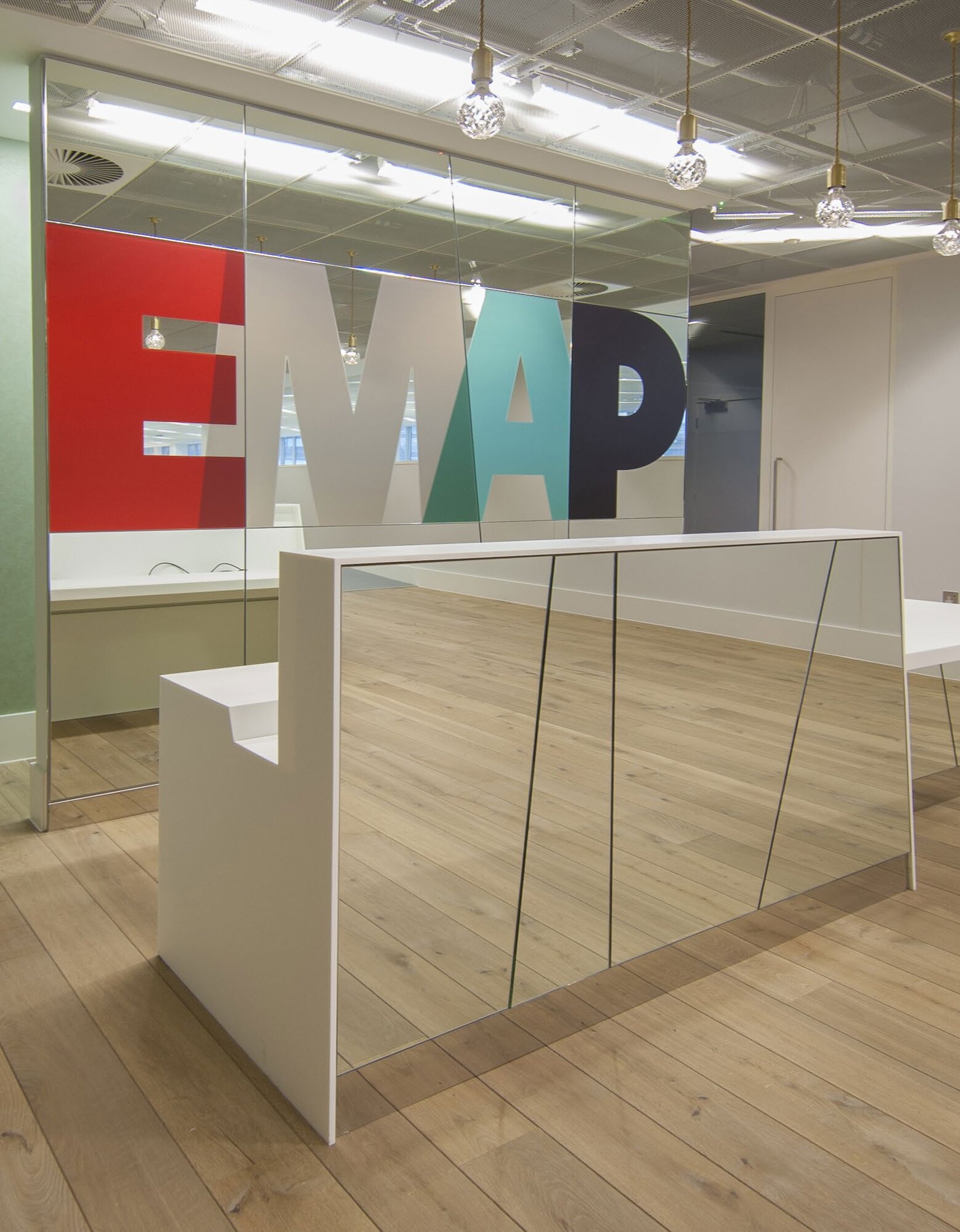
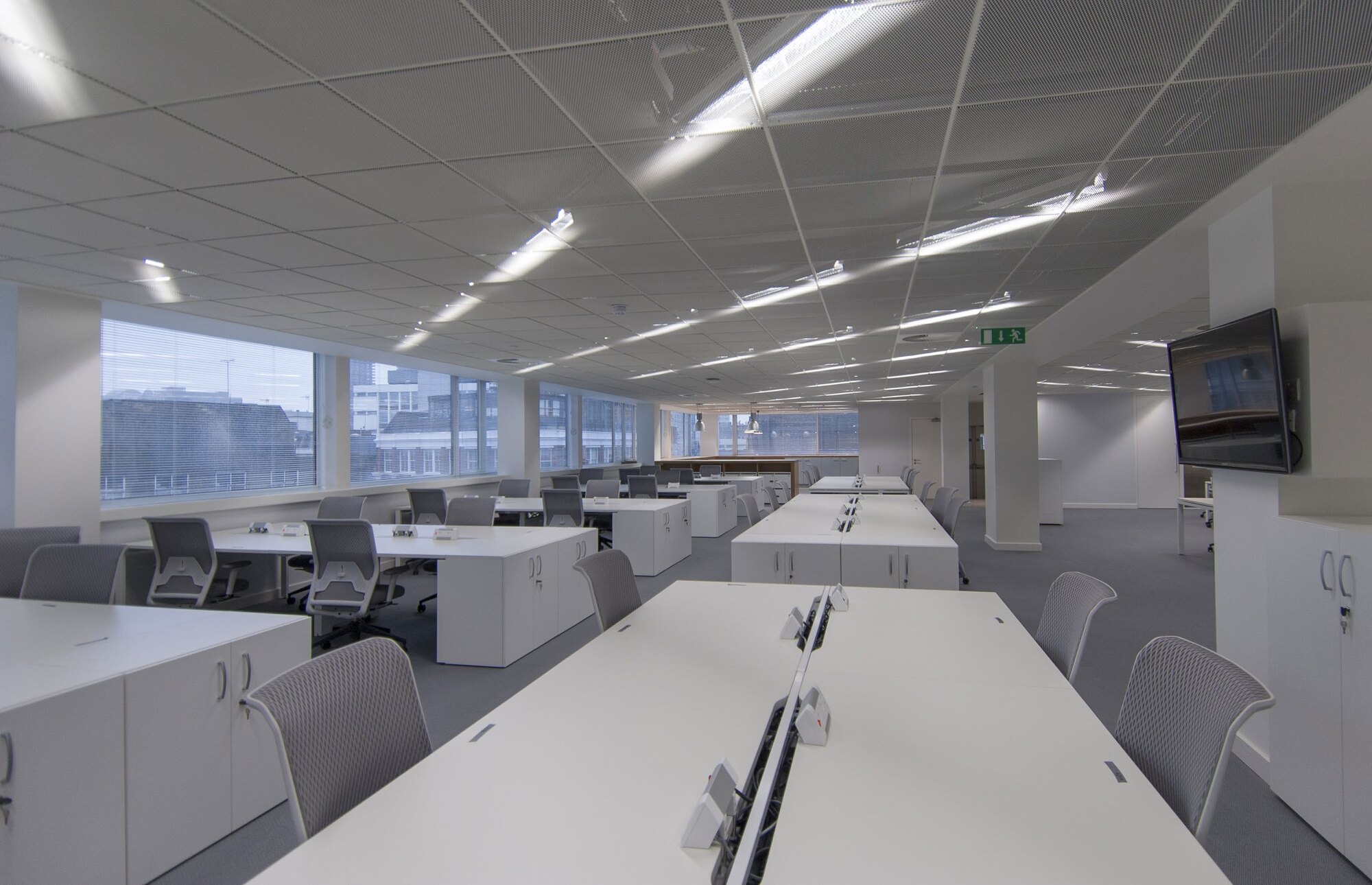
Efficient meant making the best use of the floorplates and keeping important relationships close. Effective meant supporting the real cycles of publishing rather than an abstract office model. Expressive meant creating an identity for EMAP without relying on overt branding or allowing any one of its seventeen publications to dominate.
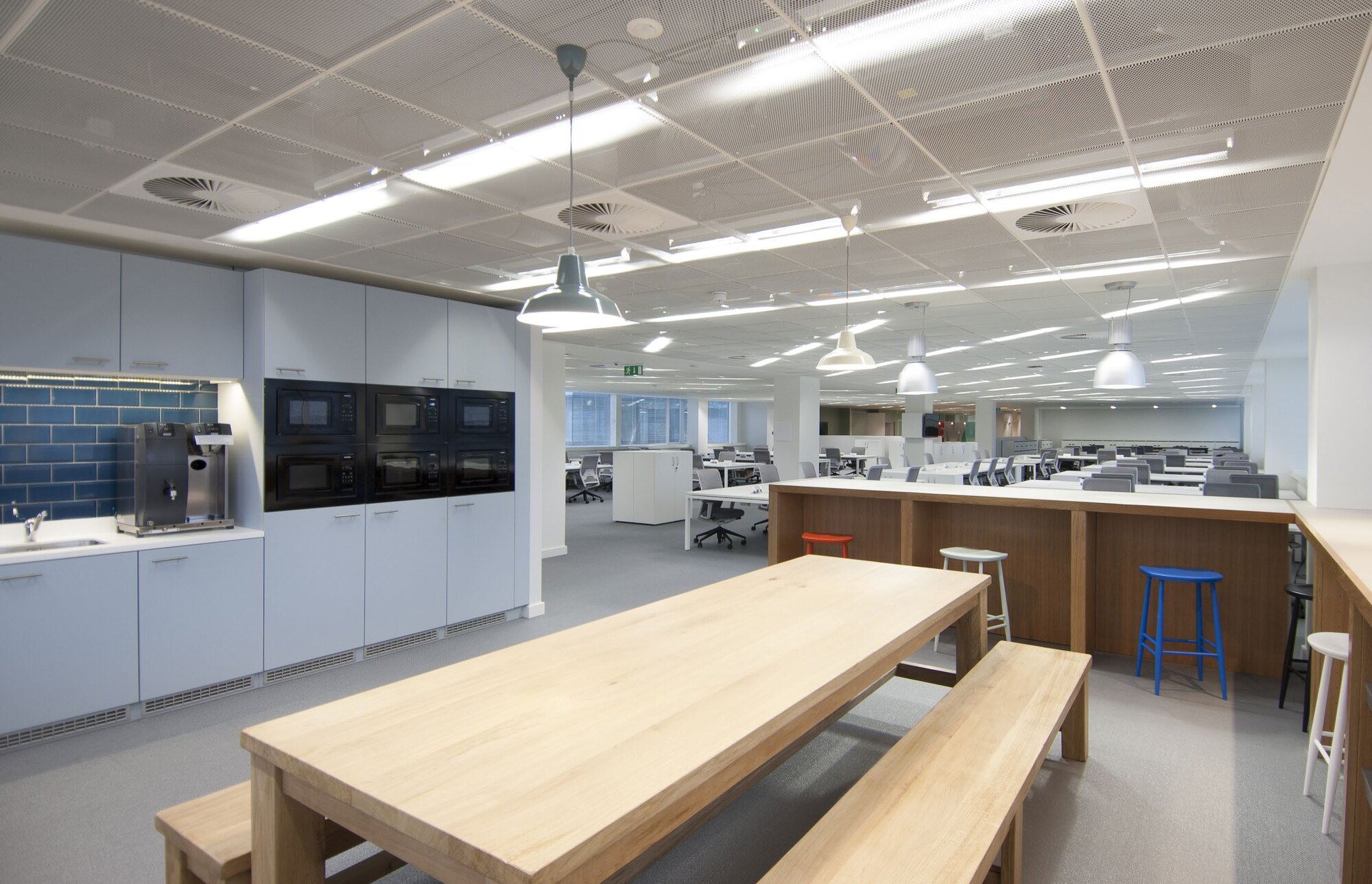
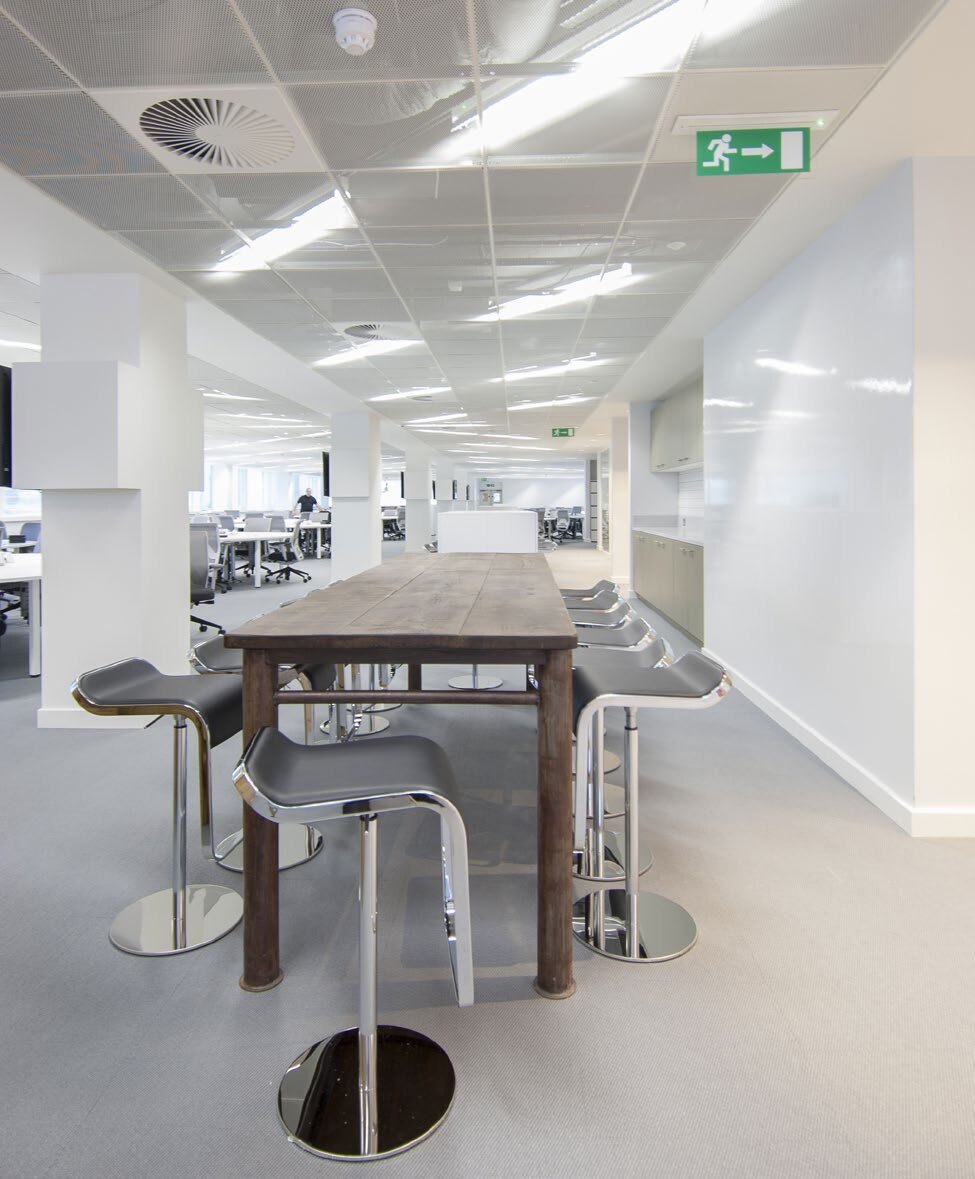
A restrained architectural language, carefully considered detailing and shared social spaces created a professional workplace that still felt open, active and connected to the organisation.
Technical Resolution
The number of people programmed into the floorplates brought the existing fresh-air provision close to its capacity. Integrating old and new services, lighting and environmental systems therefore required close coordination across the design team.
Accessibility, fire safety and the practical demands of a heavily occupied commercial workplace were resolved alongside the spatial strategy. The technical work was not separate from the design: it determined how densely and comfortably the organisation could operate while retaining flexibility for future change.
EMAP demonstrated that workplace design is not primarily about desks, finishes or fashionable ways of working. It is about relationships.
By listening before designing, the office became a physical expression of how the organisation communicated, collaborated and produced its work. The completed space was calmer, more efficient and better aligned with the daily routines of the people who occupied it.
The architecture began with understanding, and the plan followed.
Story 16 / Project data
Understanding How People Work
- Location
- Shoreditch, London
- Client
- Top Right Group: EMAP
- Role
- Principal Architect and Lead Designer
- Contractor
- Overbury
- Building
- One and a half floors of an existing commercial office building
- Collaboration
- Clive Sall Architecture and Urban Narrative
- Project Manager
- Gardiner & Theobald
- Scope
- Workplace strategy, Cat B fit-out and technical coordination
- Themes
- Workplace research · Organisational planning · Collaboration · Adaptability · Commercial interiors